
What Is a Civil Lawsuit?
When a dispute arises between individuals, companies, or organizations regarding legal rights and obligations—such as breach of contract, loan agreements, sales transactions, property leases, or claims for damages—the injured party may exercise their legal rights by filing a civil lawsuit in court. The purpose is to ask the court to issue a judgment or order requiring the other party to perform their obligations, pay compensation, or return property as required by law. Contact Us
Many people may think that filing a lawsuit is complicated and difficult. However, if you understand the court process correctly, you can prepare properly and reduce anxiety throughout the case.
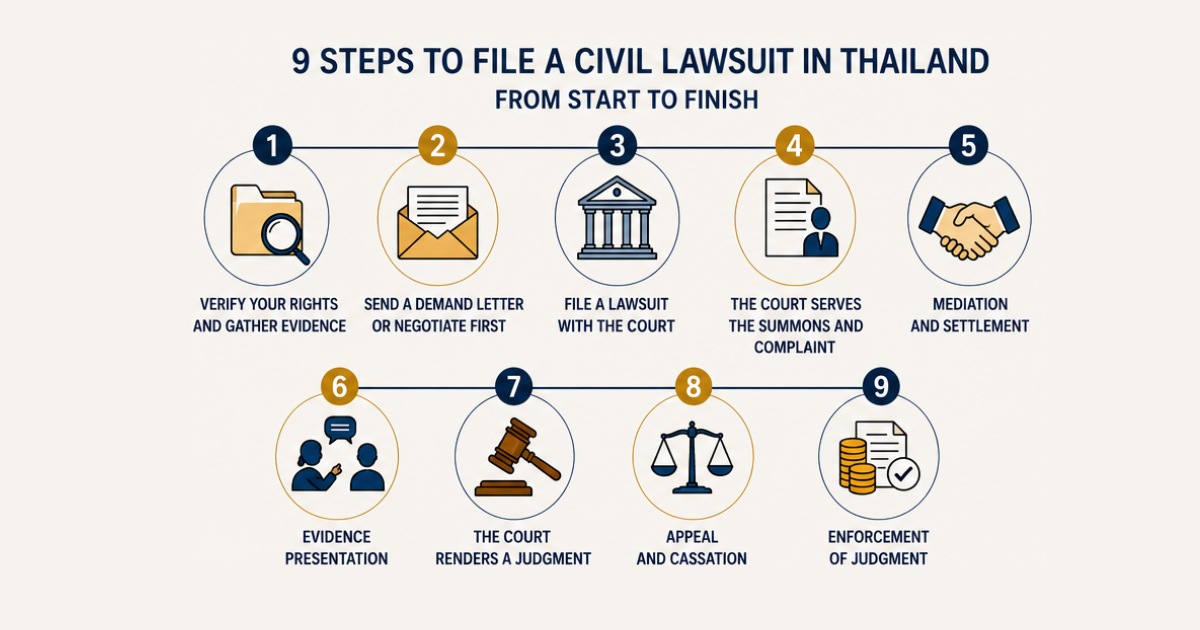
Civil Litigation Process in Thailand
1. Verify rights and evidence before filing a lawsuit
2. Send a demand letter or negotiate before filing a lawsuit
3. File the lawsuit with the court
4. Serve the summons and copy of the complaint
5. Mediation of the dispute
6. Examination of witnesses in court
7. Court judgment
8. Appeal and cassation
9. Enforcement of judgment after winning the case
Summary
What Types of Cases Can Be Filed as Civil Lawsuits?
Common examples of civil cases include:
- Loan agreement breach cases
- Sales contract breach cases
- Tort claims for damages
- Rent arrears claims
- Real estate disputes
- Inheritance division cases
- Eviction cases against tenants
- Property recovery cases
If there is a dispute involving personal rights or property rights, consulting a lawyer before filing a civil lawsuit can help assess the chances of success and plan the case properly.
Step 1: Review Your Rights and Evidence Before Filing
Before filing a lawsuit, the injured party should gather all relevant documents and evidence, such as:
- Contracts
- Debt acknowledgment letters
- Receipts
- Money transfer records
- Chat messages or conversation logs
- Emails
- Photographs
- Witness testimony
Having clear evidence helps strengthen the facts presented to the court and makes the case more effective.
In addition, you should also check the statute of limitations for the case, because each type of case has a different filing period. If the limitation period expires, you may lose the right to file the lawsuit.
Step 2: Send a Demand Letter or Attempt Negotiation Before Filing
Although the law does not require a demand letter in every case, in practice, sending a formal demand letter before filing a civil lawsuit is a recommended step.
The advantages of sending a demand letter include:
- Formally asserting your legal claim
- Giving the other party a chance to pay or resolve the issue
- Reducing litigation costs
- Serving as supporting evidence in court
In many cases, the other party may agree to negotiate and the dispute can be resolved without going to court.
Step 3: Filing the Lawsuit in Court
If no agreement can be reached, the injured party may file the case in the court with jurisdiction.
Filing a lawsuit requires preparing a complaint that includes important details such as:
- The names of the parties
- The facts of the case
- The cause of action
- The amount of money or damages claimed
- The relief requested in the complaint
In general, people often hire a lawyer to prepare the complaint because it must follow legal requirements and proper legal form.
Once the complaint is filed, the court will review it preliminarily. If it is complete and correct, the court will accept the case and schedule a hearing date.
Step 4: Service of Summons and Copy of the Complaint
After the court accepts the case, it will issue a summons together with a copy of the complaint and serve them on the defendant.
The defendant must prepare a written answer within the period required by law, explaining the facts and the reasons for defending the case.
If the defendant fails to file an answer within the deadline, the court may proceed with a default hearing and may issue a judgment based on the plaintiff’s complaint.
Therefore, when receiving a court summons, it should not be ignored or left unattended, as this may seriously affect the outcome of the case.
Step 5: Mediation and Settlement
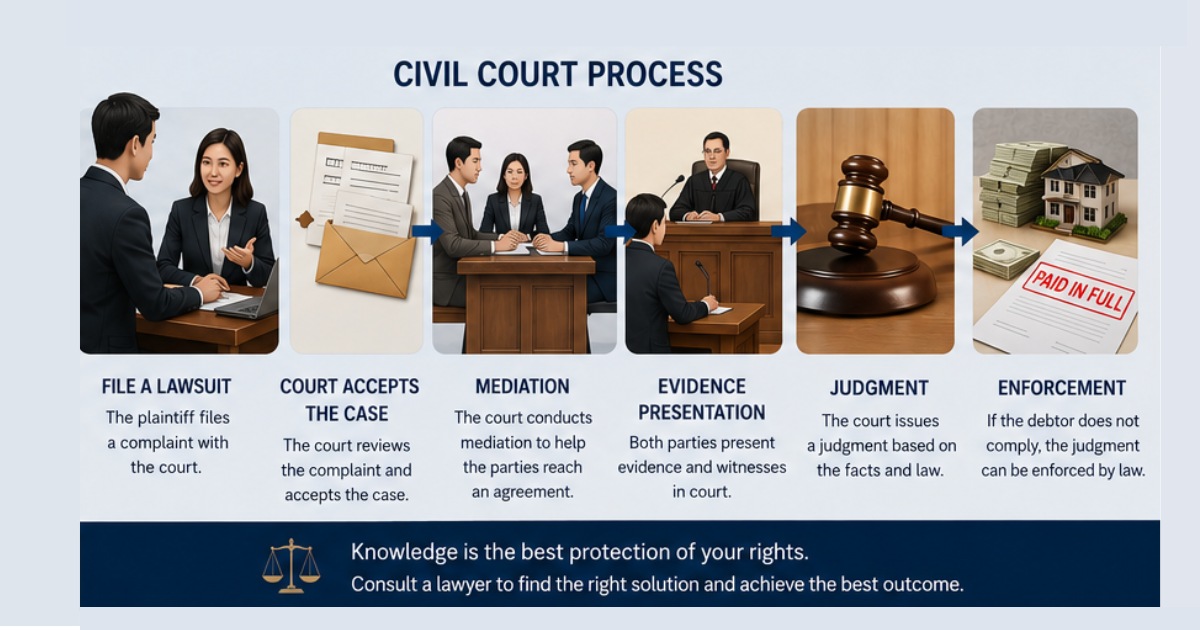
At present, courts place great importance on mediation and dispute resolution.
Before the trial stage begins, the court often gives the parties an opportunity to negotiate and settle the dispute.
The advantages of mediation include:
- Saving time
- Reducing costs
- Lowering conflict between the parties
- Allowing both sides to agree on suitable terms
If the parties reach an agreement, the court will prepare a settlement record, which has the same legal effect as a court judgment.
Step 6: Presenting Evidence in Court
If the parties cannot reach an agreement, the case will proceed to the evidence stage.
At this stage, each party will present evidence to the court, such as:
- Documentary evidence
- Witness testimony
- Expert testimony
- Physical evidence
Lawyers for each side will question witnesses and present evidence to support their arguments.
This stage is the heart of a civil lawsuit, because the court will use all facts and evidence presented to decide the dispute.
Step 7: The Court Issues Its Judgment
Once the evidence presentation is complete, the court will schedule a date to announce its judgment.
The judgment may take several forms, such as:
- Ordering the defendant to pay a debt
- Ordering compensation for damages
- Ordering the return of property
- Dismissing the case
- Ordering performance under the contract
The parties may request a certified copy of the judgment for use in the next steps.
Step 8: Appeal and Supreme Court Review
If either party disagrees with the judgment, they may exercise the right to appeal to a higher court within the period prescribed by law.
In some cases, after the Court of Appeal has issued its judgment, it may be possible to file a further appeal to the Supreme Court, depending on the legal conditions.
The appeal and Supreme Court review process provides another level of scrutiny to ensure the correctness of the judgment.
Step 9: Enforcement After Winning the Case
Even if the court has ruled in your favor, if the debtor or defendant does not comply with the judgment, the winning party must proceed with enforcement.
Examples of enforcement actions include:
- Seizure of assets
- Garnishment of salary
- Freezing bank accounts
- Auctioning property
This step is very important because it ensures that the winning party actually receives the rights or money awarded by the court judgment.
Conclusion
Filing a civil lawsuit in Thailand involves several steps, from reviewing your rights and gathering evidence, sending a demand letter, filing the case in court, mediation, presenting evidence, receiving the judgment, and finally enforcing the judgment after winning the case.
Understanding the court process correctly helps parties prepare properly, reduce legal risks, and increase the chance of receiving justice under the protection of the law. If you are facing a civil dispute, consulting a lawyer at an early stage is a wise choice that can make the litigation process more effective and beneficial to your case.
Should You Consult a Lawyer Before Filing a Civil Lawsuit?
Although the law allows individuals to represent themselves, consulting a lawyer before filing a civil lawsuit can help with:
- Assessing the chances of success
- Checking the statute of limitations
- Collecting evidence properly
- Preparing an effective complaint
- Planning litigation strategy
- Reducing mistakes in the court process
Especially in cases involving high-value claims or complex legal issues, having a lawyer from the beginning can increase confidence and fully protect the plaintiff’s rights.
If you do not understand, or need legal advice regarding this matter, please contact us here.