

Online Fraud and Scams: A Growing Problem in the Digital Age
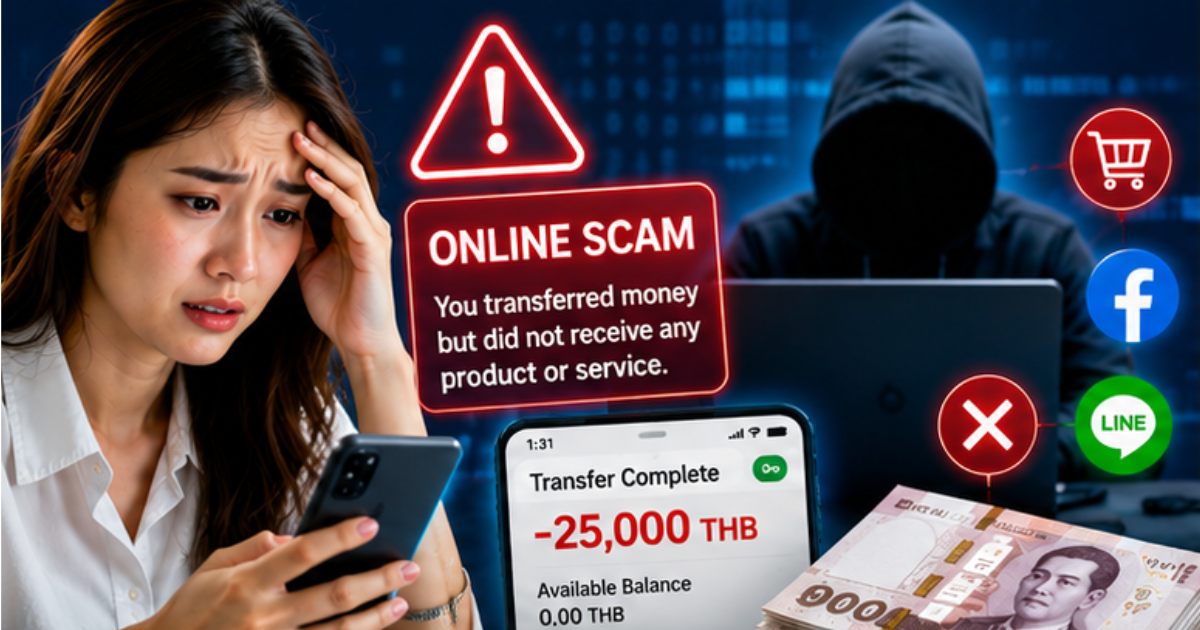
In today’s digital era, buying and selling goods, transferring money, and conducting financial transactions can all be done quickly and conveniently through mobile phones. However, this convenience has also led to a sharp increase in online fraud and scams. Many victims lose money ranging from a few thousand baht to millions of baht through various deceptive schemes, such as fake online sales, investment scams, loan scams, prize scams, or even impersonation of government officials.
Many people do not know what to do after being scammed. Some believe that once the money has been transferred, it is impossible to trace or recover it. In reality, Thai law provides legal procedures and remedies for prosecuting offenders, as well as mechanisms for tracing assets and funds obtained through fraud.
What Is Online Fraud?
Online fraud is the act of using false information or concealing the truth in order to deceive another person into believing something false and causing them to transfer money, hand over property, or take some action that results in damage.
Common examples of online fraud include:
- Selling products online but never delivering them
- Promising high returns on fake investments
- Luring victims into transferring money for fake part-time jobs
- Scamming people into paying fees for online loans
- Creating fake bank accounts or social media accounts
- Impersonating police officers, government officials, or private companies
- Sending phishing links to steal bank account information
Such conduct may constitute the offense of fraud under the Thai Criminal Code and may also involve additional offenses under Thailand’s cybercrime laws.
What Should You Do If You Are Scammed Online?
1. Collect All Evidence Immediately
Once you realize that you have been deceived, you should gather all available evidence as soon as possible, such as:
- Bank transfer slips
- Chat messages
- Screenshots of conversations
- Bank account numbers
- Phone numbers
- Website URLs
- Social media links
- Profile pictures of the offender
This evidence is extremely important for investigation and criminal prosecution.
2. Contact Your Bank as Soon as Possible
If you have just transferred the money, you should immediately contact both the sending bank and the receiving bank to report the incident and request a transaction hold or account freeze if possible.
The faster you act, the greater the chance of tracing the money and freezing the offender’s account.
3. File a Police Report
The victim should file a complaint with the police investigator or the relevant cybercrime authority and present all supporting evidence.
Important details to provide include:
- Date and time of the incident
- Amount of money lost
- Contact channels used by the offender
- Details of the scam
A complete and accurate report will help authorities investigate more efficiently.
What Legal Liability Does the Offender Face?
In general, deceiving someone into transferring money may constitute fraud under the Thai Criminal Code, which carries penalties of imprisonment and fines.
If the fraud was committed through computer systems, electronic data, or online media, additional offenses under Thailand’s Computer Crime laws may also apply.
Furthermore, if mule accounts or organized networks were used, multiple individuals involved in the scheme may be held criminally liable together.
Can You Recover Your Money?
Many people believe that once they have been scammed, they can never get their money back. However, under Thai law, victims still have the right to claim compensation.
Possible legal actions include:
- Filing criminal charges against the offender
- Requesting the return of property obtained through the offense
- Filing a civil lawsuit for damages
- Seizing or freezing assets under the law
However, recovering money requires quick action and complete evidence.

Why Should You Consult a Lawyer After Being Scammed?
Although victims can file a police report on their own, many cases are complicated, such as:
- The offender used multiple mule accounts
- There were several accomplices
- The victim is located in another province or abroad
- The financial loss is substantial
- Asset recovery is required
Consulting a lawyer can help you understand your legal rights, plan the case properly, and prepare the necessary documents and evidence.
Criminal Case Services by Saksiri Law and Accounting
Saksiri Law and Accounting, Phuket, provides comprehensive legal services for individuals and businesses, especially in criminal cases involving fraud and online offenses.
Our services include:
- Legal consultation for fraud cases
- Reviewing facts and evidence
- Preparing case documents
- Filing police complaints and following up on the case
- Representing clients during the investigation stage
- Representing clients in court
- Filing claims for damages against offenders
- Services for both Thai nationals and foreign clients
With experience in legal consultation and litigation, our firm is ready to advise and assist victims in exercising their legal rights properly.
Conclusion
Being scammed or becoming a victim of online fraud is an ongoing problem in Thai society. If you become a victim, you should immediately collect evidence, contact your bank, and file a police report as soon as possible to increase the chance of tracing the offender and recovering your losses.
If the case is complex or involves a large amount of damage, consulting an experienced criminal lawyer can help ensure that the process is handled correctly, quickly, and effectively.
Saksiri Law and Accounting is ready to provide legal consultation and support for fraud cases, online cases, and all types of criminal cases throughout Thailand.